

Wine and Religion
Some readers will not like this. Which sort of proves its point.

Wine and religion
As it happens1 I like, admire, and buy quite a lot of Natural wine. The only thing that ever puts me off is that culturally, it appears to have a quality that attracts the lunatic.
What really fascinates me is why?
A curse/benefit of having an MPhil on “food and religion”2 is that you see a lot of life through the lens of… well… religion. Most wine appreciation appears to me on a spectrum. like the assorted attendances of the Church of England. There’s the committed weekly enthusiast at one end, through to the annual Christmas-and-weddings-only attendee who doesn’t know what page we’re on in the hymnal at the other. In much the same way there are people who drink the saccharine Nativity comfort of Barefoot Merlot (because it’s easy and cheap) through to the Bible-study fans of Tondonia who make sure to listen to a weekly sermon from a dog-collared reverend in the Sunday papers3.
But Natural wine’s appeal seems to be with wine’s The Plymouth Bretheren. The sort who would fold their arms across their chest rather than have to touch The Book of Common Prayer. (Like my friend Kenny’s dad once did at a funeral.) The sort who would spend hours listening to fire and brimstone sermons about the end of the world. And, one assumes, going home to have joyless procreative sex wearing a chemise cagoule to make sure they minimise their pleasure.
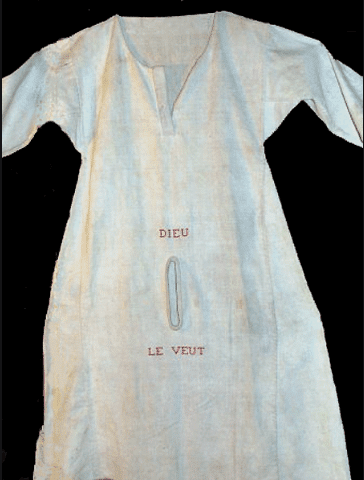
Wine is more tribal that we care to admit. Like Henry Jeffreys I am enjoying “The Rage of Party: how Whig versus Tory made modern Britain” by George Owers. As Henry points out in his Substack, in the 17th and 18th centuries:
Tories who wanted to express their political allegiance through drink would have drunk claret and Whigs port.
We don’t live in such a binary age. And I’m not sure it’s so simple as Reform UK voters drinking English sparkling wine and Omnicausers choosing Natural Amber Rikatsiteli.
Lots of people have speculated on the “meaning” of natural wine fandom. And they’ve tried to parse it through politics, fashion, trends, class, or something else. But none - as far as I know - have drawn on the work of Mary Douglas. An anthropologist at the heart of my “food and religion” MPhil many years ago.
In her book Purity and Danger, Mary Douglas argued that what looks like obsession or irrationality is usually something else entirely. What’s going on is a system of “classification under pressure”. Her famous line that “dirt is matter out of place” is not about hygiene, it’s about the importance of boundaries. Even if those boundaries appear arbitrary. Like complicated rules about cloven-hoofed animals, shellfish, mixing meat and dairy, or whether what you did to your wine counts as biodynamic or not.
Douglas argues that cultures become most anxious about purity when the categories that organise their world feel fragile. Now, if that doesn’t make you connect the rise of natural wine to what’s happening the news then you’re not reading the news enough. And when the world feels fragile you get lots of pollution rules and taboos and prohibitions that make it feel more secure. And in turn they bind people together. So that - in turn again - they become how groups defend meaning.
Looked at it this way, natural wine’s fixation on sulphur levels, filtration, intervention and “life” aren’t oenology. They’re ritual boundary-maintenance. It means that an additives isn’t a technical choices so much as a “contaminant”. And using manufactured yeast becomes a moral transgression.
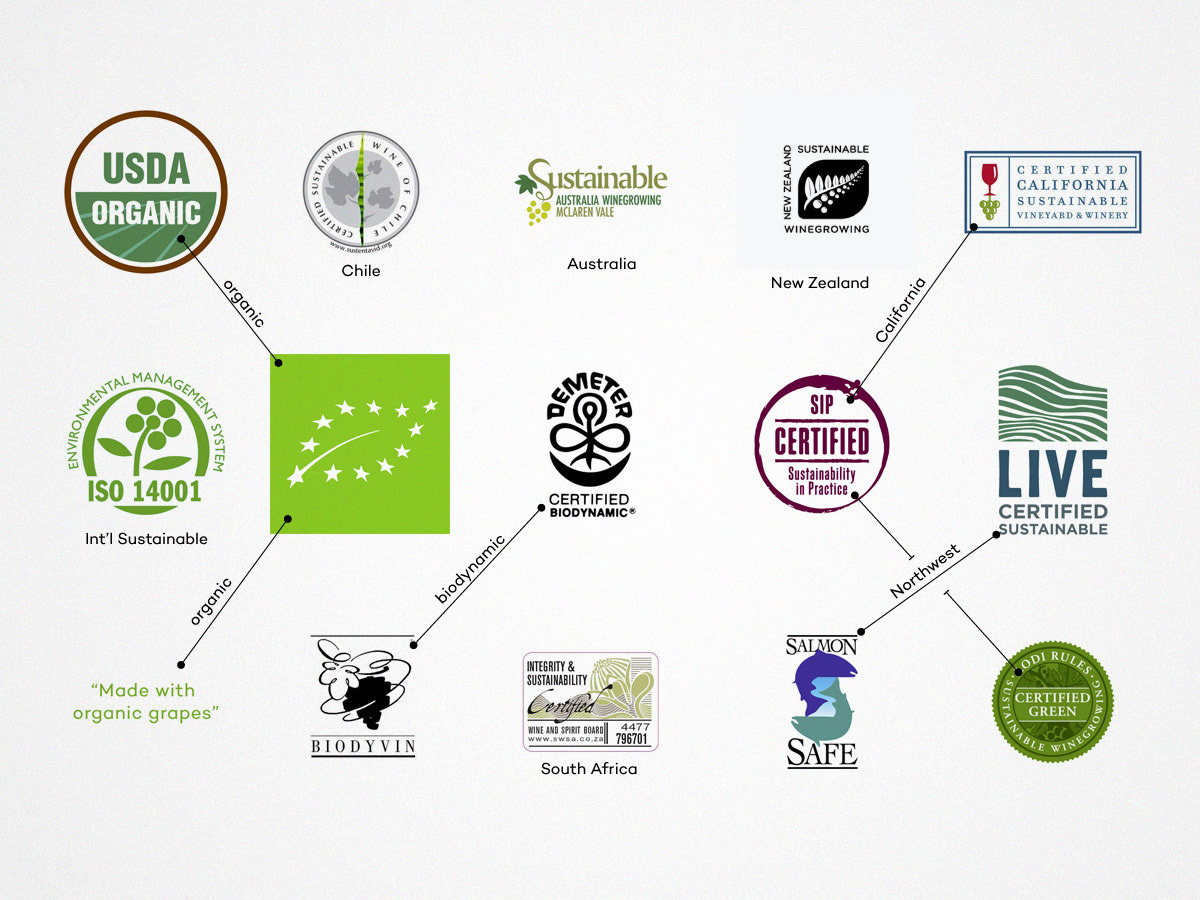
In my MPhil Mary Douglas showed how food systems like this tend to intensify, not soften, over time. If “purity”is your organising principle, compromise becomes betrayal. So you end up with people arguing about whether lobster counts as “fish” on Fridays - as in the famous case of “lobster” Cardinal Richelieu. And it’s surely why natural wine culture splinters into ever-finer definitions of what counts as “truly” natural. Much like 17th century dissenters splitting into Muggletonians, Behmenists, Seekers, Saltmashians, Familists, Grindletonians, and endless other sects all convinced the others are destined for hell. If you want to know what a map of modern dissenters looks like… it’s something like this:
It’s also why it’s pointless saying that the wine “doesn’t taste nice”. Oddness is the point, not the problem. Strange flavours, cloudiness, and volatile acidity work like religious dietary laws or dress codes. They’re costly and visible commitments that sort the faithful from the curious chaff.
In the end I feel much the same about natural wine as I do about the hymn “Lo! He Comes with Clouds Descending” by the Moravian Bretheren dissenter “Swaddling” John Cennick.
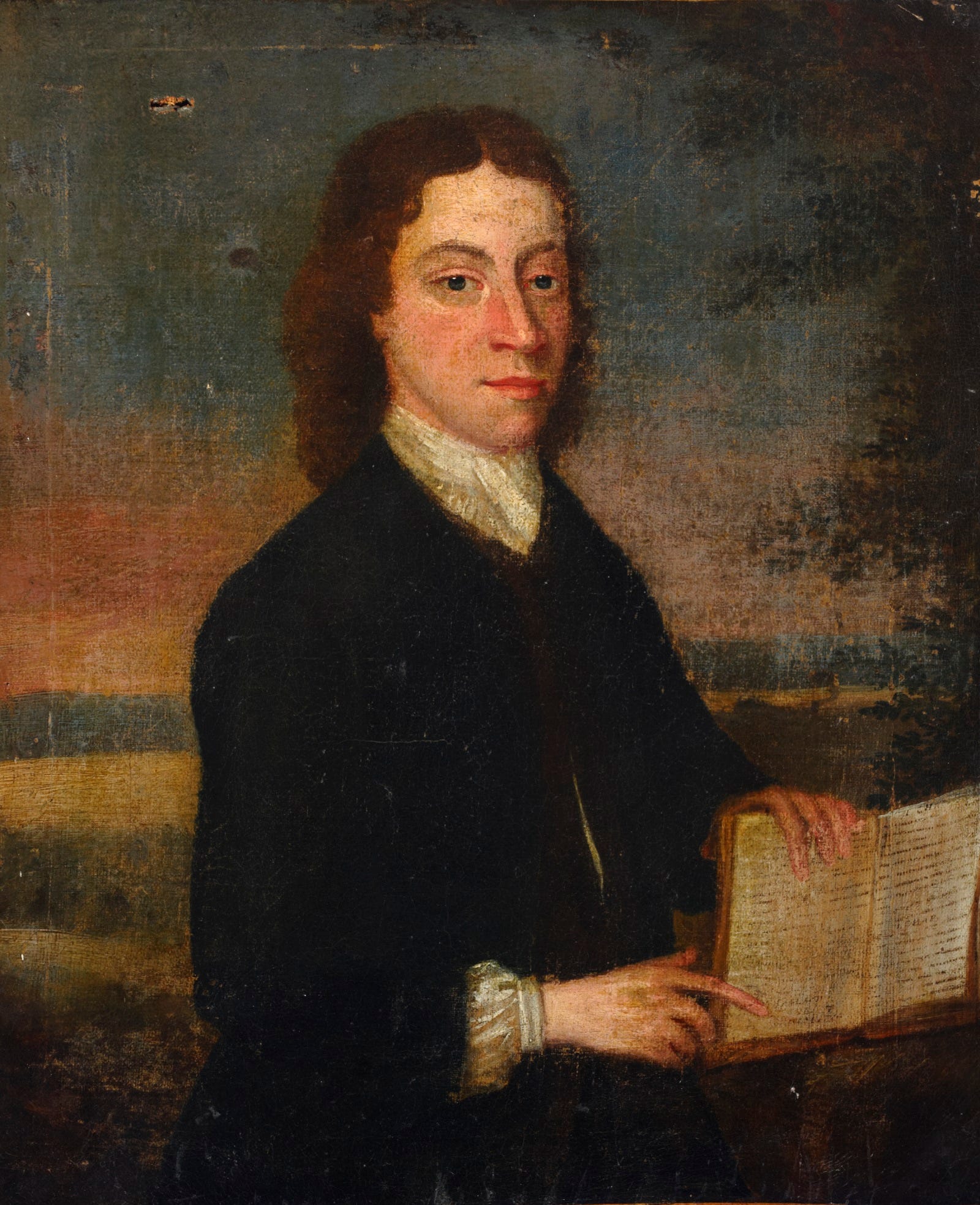
It’s a lovely hymn, still sung and enjoyed in churches today. But written by a man of strong convictions known for his “self-righteous tone and lack of irony”. You can practically picture him opening the bottle and telling you “don’t be put off by the colour…”. Also a man known for his
…childish glee at overcoming an opponent, his ingenuous recounting of prophecies about himself and his evident self-satisfaction with his powers [that] all point to a rather smug and unreflective character.
Not that I’m saying that’s what natural wine evangelists are like. But I’m not saying there aren’t plenty of people like that in the movement either.
I like both the hymn and Natural wine. But I wouldn’t want to have dinner with their evangelists.
#stemwatch
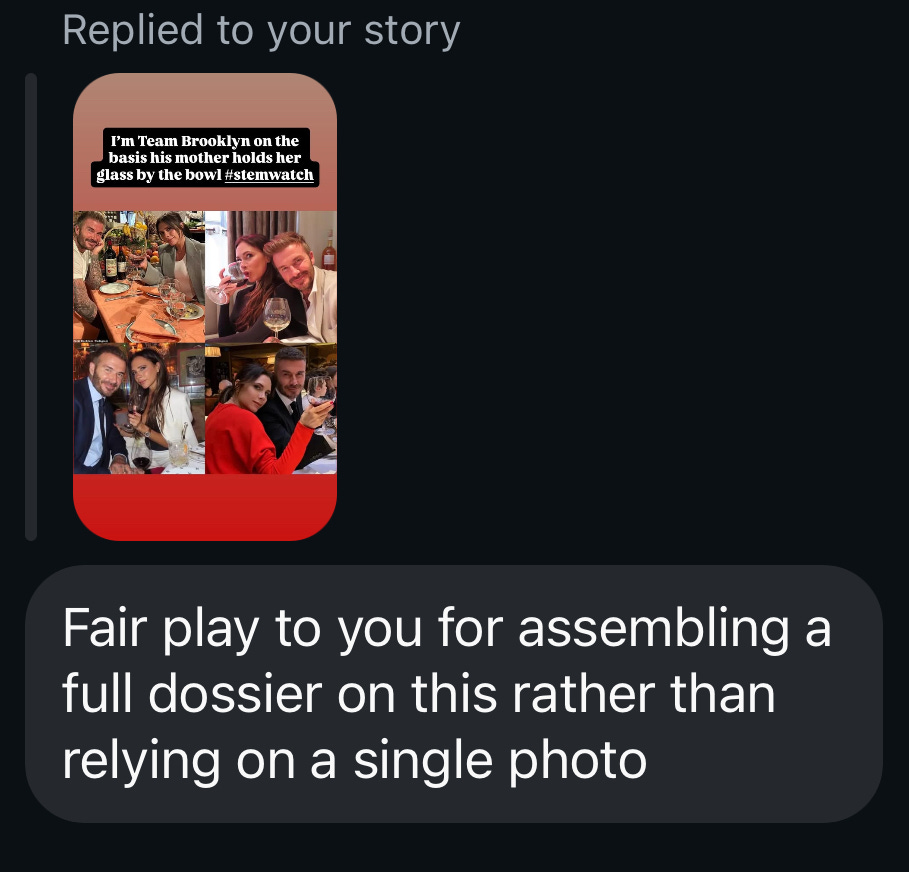
A semi-regular update on #stemwatch. Celebrities, the great, and the not-so-good shaming themselves by caught holding their wine glass by the bowl4.
I noted last week - with sadness - that wine influencer Brooklyn Beckham has cut contact with his parents. And wondered if possibly his mother’s stem holding had anything to do with it
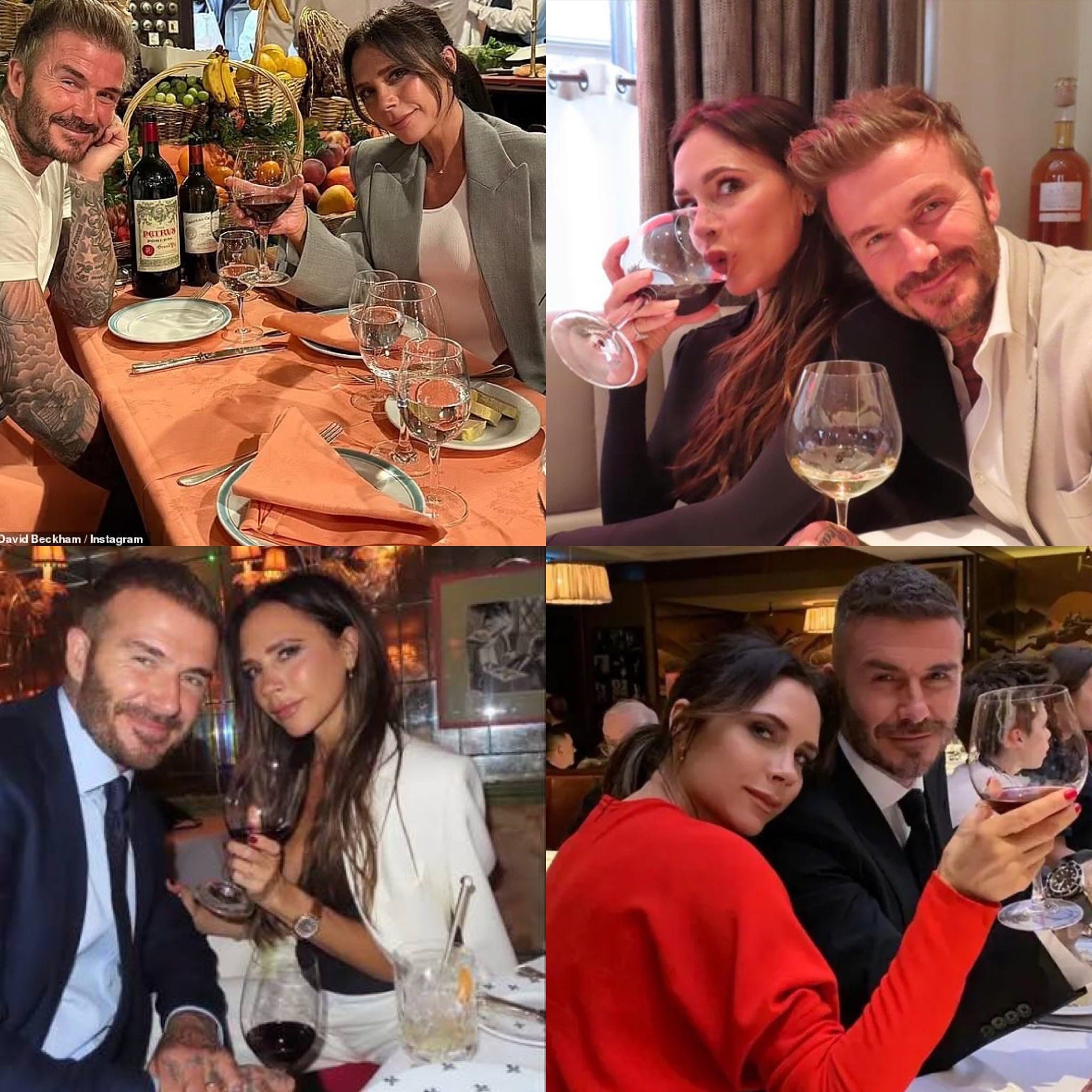
Afterwards I was particularly pleased to receive this response from a follower.
If you’re a fan of #stemwatch, and who isn’t… (actually loads of people, hence the footnote above) I can also recommend #trouserwatch from the brilliant “food/booze trollop” Kate Hawkings on Instagram.
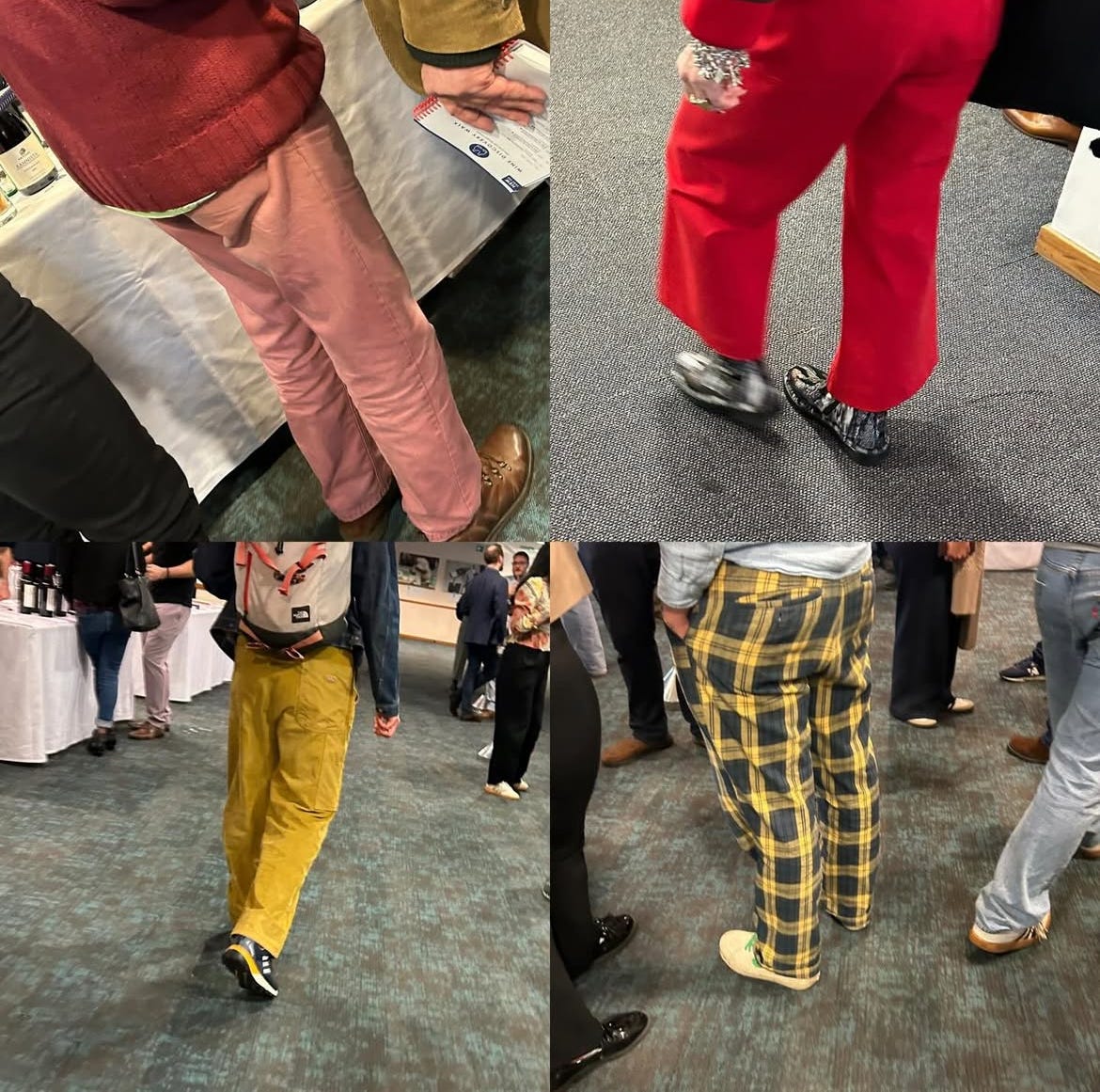
Kate is a tireless cataloguer of British wine trade trousers. I’ve never quite got to the bottom (pun intended) of why the British wine business takes so readily to extraordinary trousers. But I’m always grateful to Kate for the latest trends. Which are also usually trends that would have been familiar to PG Wodehouse. Or the Prince Regent.
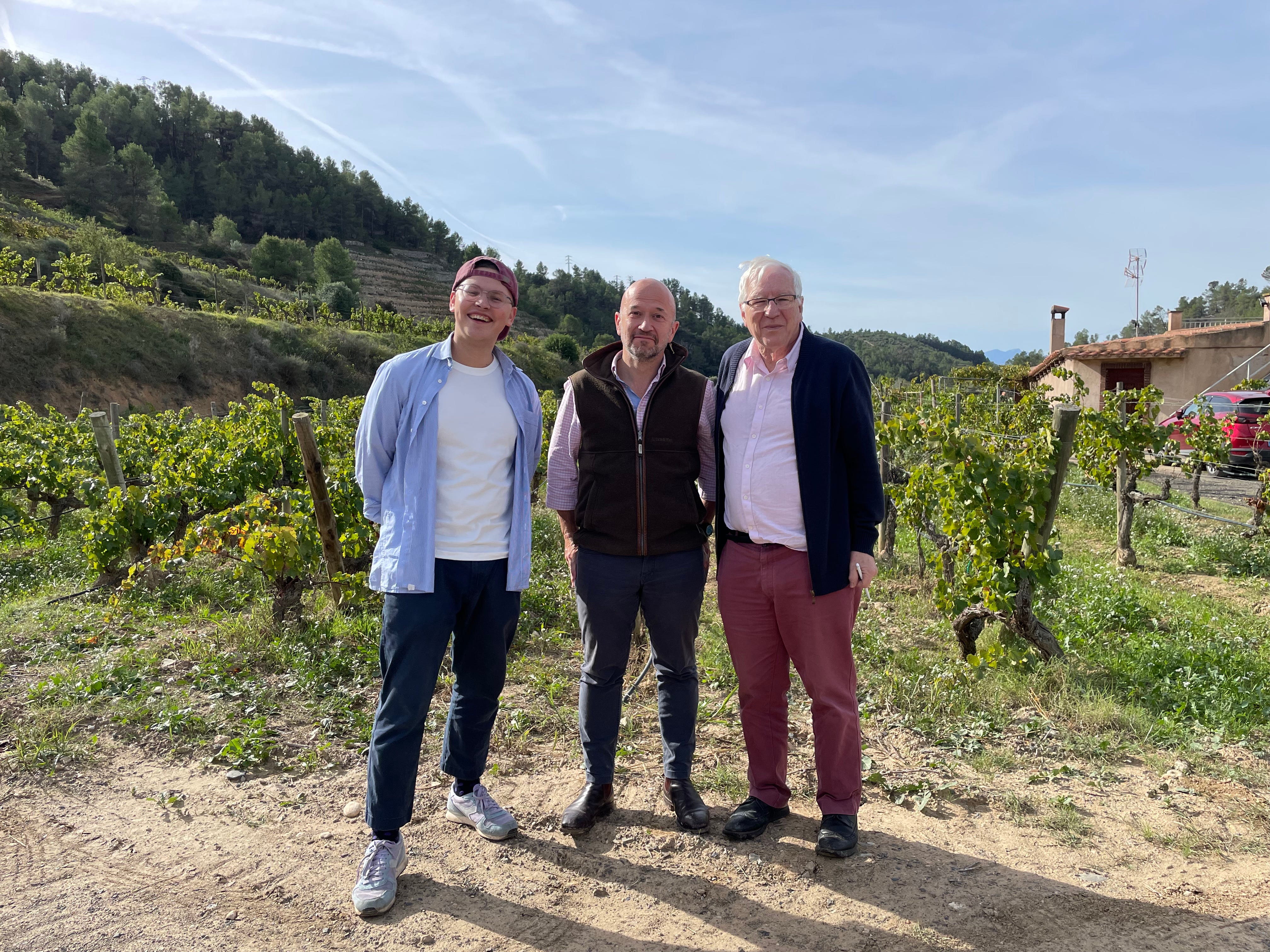
It also gives me a chance to remember this photo that appeared in my “memories” this week. It features Harry Ballmann of the excellent Cepage fine wine merchant, and wine educator and author Keith Grainger.
I titled it “the three ages of wine men”.
And thank you to reader Jane Andrew who sent in this photo of Cary Grant and Margaux Hemingway.
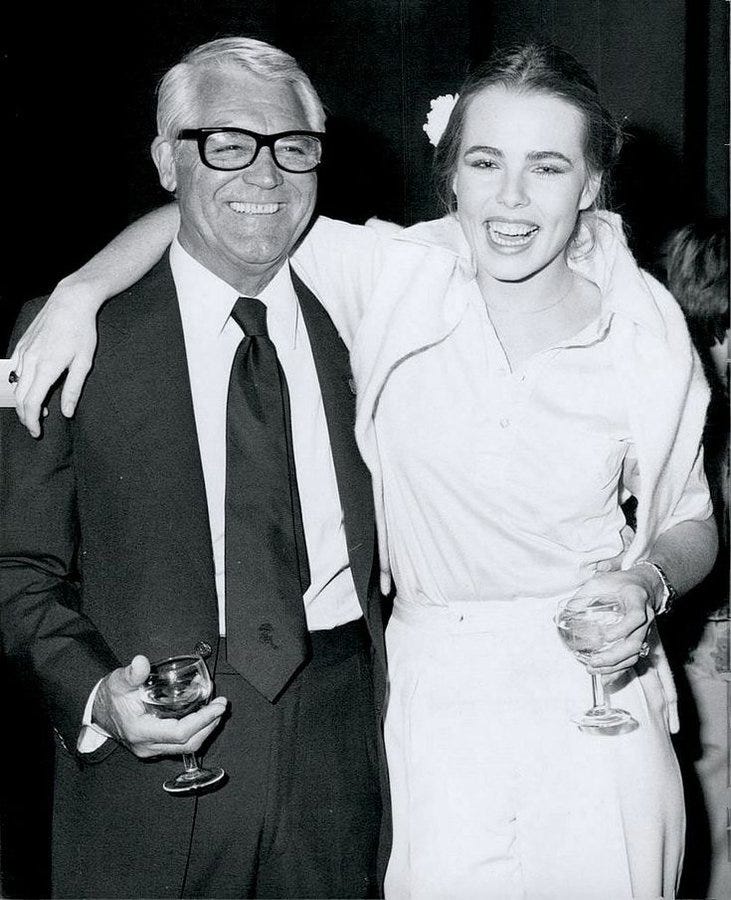
Holding Paris goblets by the bowl. And she was even named after the Chateau. Very disappointing.
Entirely unrelated and not-fun fact… at BBC North in the UK using the phrase “as it happens…” and saying “now then” more than once are both disciplinary offences, as they are associated with Jimmy Savile.
I genuinely do. I believe it is the only one in the world.
I grant you, “a dog-collared reverend” is an unusual way of describing Victoria Moore or Jancis Robinson. But you get the point. Although I think my chum Helen Savage was for many years an actual vicar.
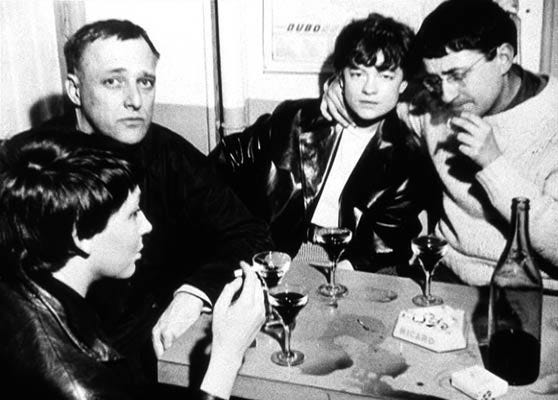
NO I DON’T ACTUALLY THINK THIS. One of the more remarkable things about #stemwatch is the number of people who think that anyone in their right mind really would judge the world depending on how people hold their wine glass. This would be deranged. Hold your wine glass how you like. Although - as it happens - there are entirely legitimate reasons for (broadly) favouring the stem over the bowl. To be honest I’d have stopped this years ago. But the death of irony in the online world and the po-faced tweets people send make it all the more fun. #stemwatch is my version of a Situationist prank. I think Guy Debord (on the right) would be proud.
And in a separate thread, I think I may have been the only person in the world who thought about you during Hamnet in which there is a scene where Will Shakespeare is upbraided for holding his wine glass incorrectly. I wondered if Chloe Zhao was secretly a fan.
I am immediately thrust back in time to the evening of what I like to refer to as “canem crepitu vinum” in a cellar in Tbilisi, at the end of which I was told “you just don’t understand this wine”.