

The basis of every sale is an argument
The wine business is "lazy" when it comes to storytelling. And yes, it is. But here I help you become better wine storytellers while watching the television.

“The basis of every sale is an argument.”
So said veteran wine bod Simon Farr at the DB Conference a week ago.

The inverse is the title of a book by
, “A Story is a Deal”. I suspect that Simon would like more people in the wine business to read books like Will’s1. He suggests that when it comes to storytelling, the wine business is “too lazy as a trade”.We really ought to be putting more effort into telling the stories of the wine the customers should be buying, rather than just peddling the same old.
But where to begin? Do you need to read books? Then digest them. And then figure out how to apply that to wine?
You can. But not always. I tell stories for a living and often the most useful lessons come from stopping when you see something you’re watching anyway. You start to think “that’s good”. And then ask why.
Here are three examples. The non-lazy wine people among you can apply them almost immediately.
My name’s Kitty
“My name’s Katherine. I’ve recovered from breast cancer thanks to a mastectomy. I also suffer from a seafood allergy. So I hope that gives you a bit of background about me.”
Some of you may already know where I’m going with this. Because you already know the far more memorable version. As performed by Patricia Routledge (lately RIP) and written by Victoria Wood (RIP far too early).
“My name’s Kitty. I’ve had a boob off and I can’t stomach whelks. So that’s me for you”.
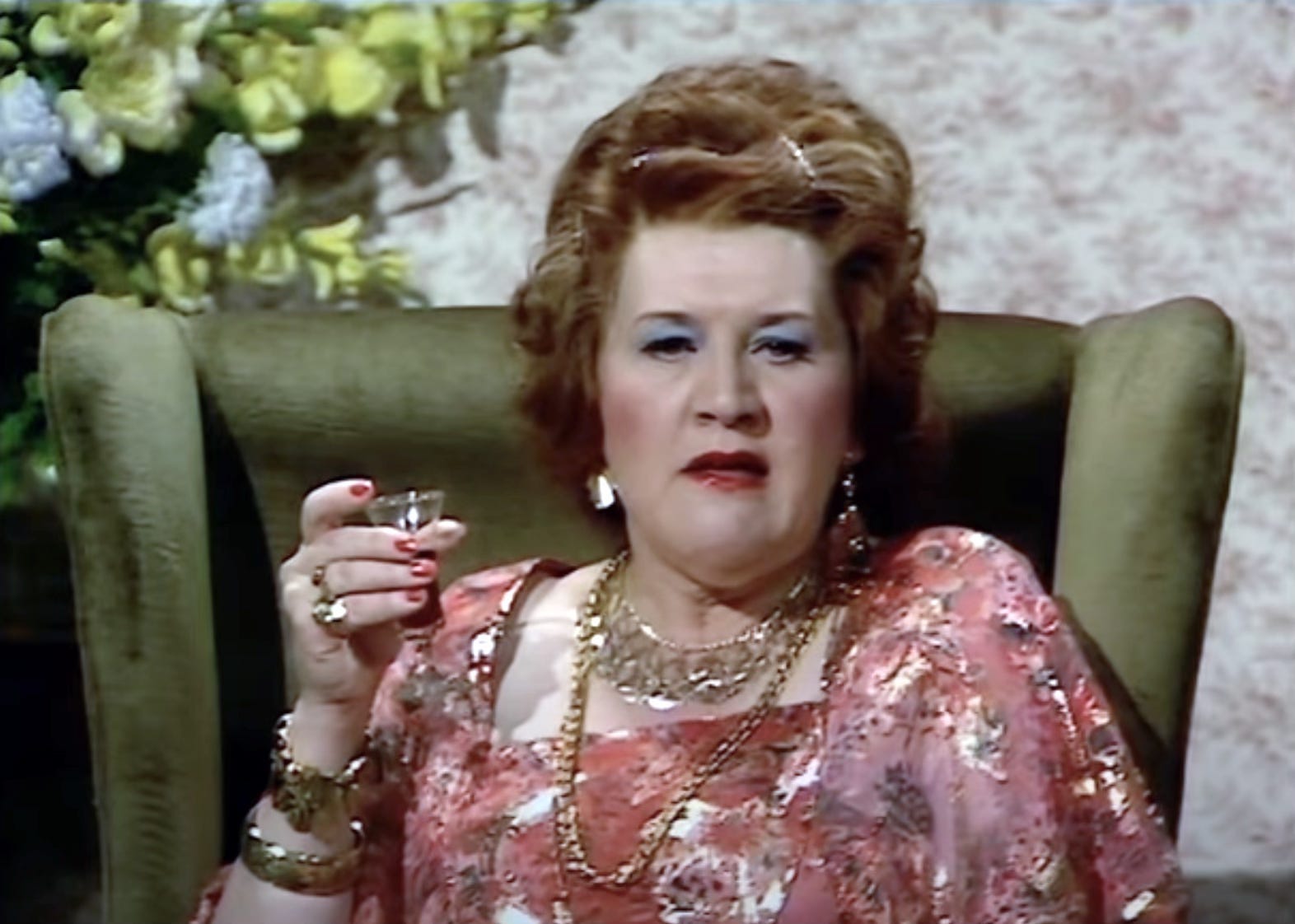
This contrast comes from the excellent “Be Funny Or Die: How Comedy Works and Why It Matters” by
.Most wine “storytelling” reads like the first. Explanatory and serious, but also abstract and formal. But people don’t fall for facts. They fall for emotions. People fall in love with an introduction like the second. That’s why it’s one of the most famous opening lines in British TV. It introduces you to more than the facts of the character. In eighteen words you know far more than the facts of this person’s life, you know “them”.
Wine has a tendency to the doleful, self-important, and serious. An unfortunate consequence of this is “over-dog” syndrome2. “We’ve been here for centuries, we own the most marvellous land on the planet, we create excellence, those who appreciate us are models of discernment”. But this jars when over-dogs plead for sympathy. “It was a poor harvest, it’s a struggle to be sustainable, why does notbody want to pay thtough the nose for my wine?”
Keep reading with a 7-day free trial
Subscribe to Joe Fattorini's Substack to keep reading this post and get 7 days of free access to the full post archives.