


In the autumn of 2003 I was asked if I wanted to interview the country’s most exciting wine writer. If I’m honest, I didn’t.
Matthew Jukes was cleverer, harder-working, more successful, and handsomer than me. And he had fabulous hair. But none of it mattered when we met. Matthew managed to tell me the rudest anecdote I’ve ever heard (about himself), inadvertently outed my cousin, and came up with a tasting note so punchy it earned a formal rebuke from a PR company.
Inevitably, we became friends. It helped that we were the same age, with similarly aged children, who became twice-married, all while working across wine writing and the “commercial” wine trade as well as dipping our toes in television. We last met by accident six weeks ago, while I was tasting wine with his wife Amelia.
Last week Matthew died while on a family holiday in Portugal. How better to remember him than with the article I wrote when we first met.
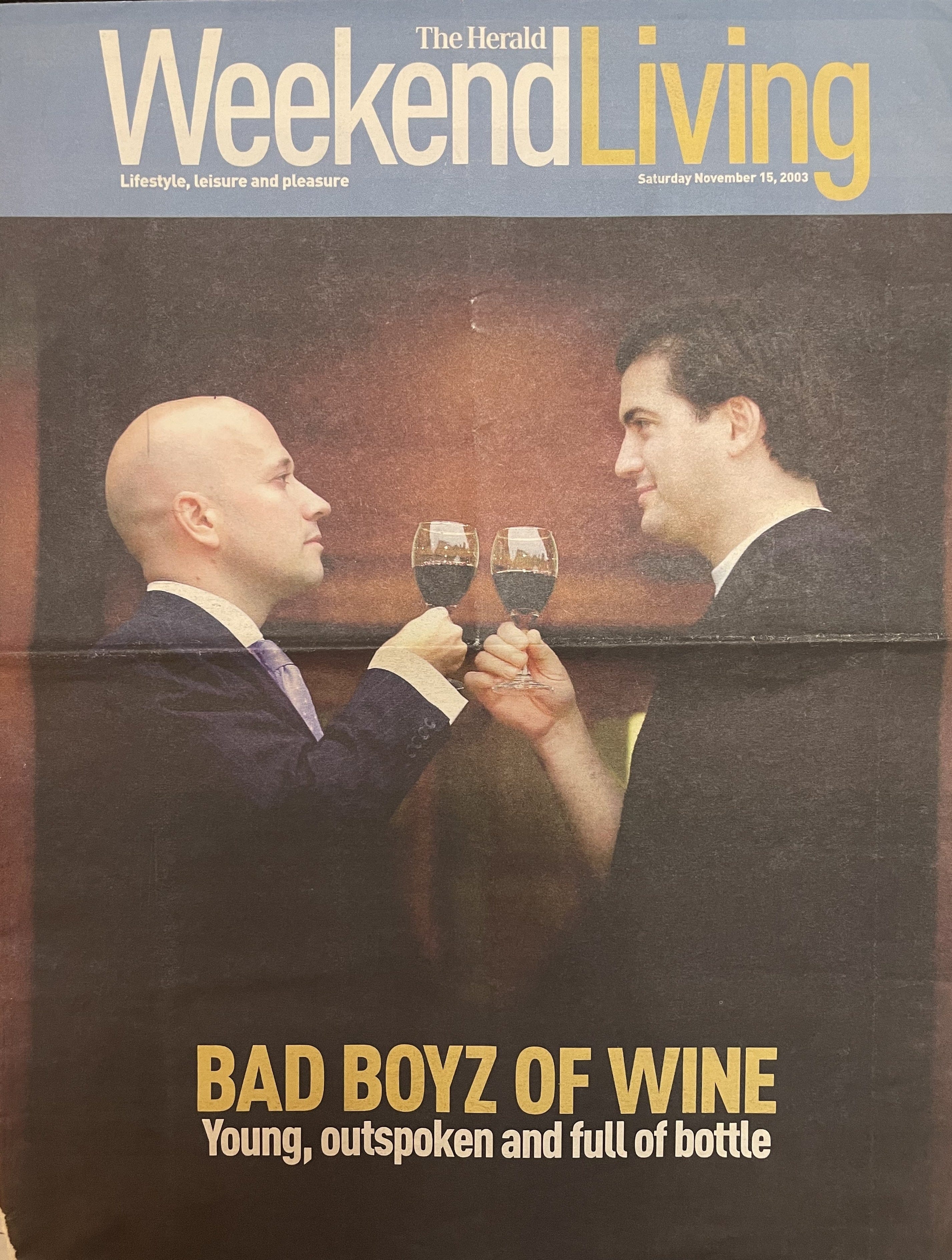
Wine bottles at dawn
Joe Fattorini dusts down his tasting notes and prepares to duel with Matthew Jukes. But then – the new men of wine hit it off
FALLING out with Matthew Jukes ought to have been easy. After all, he’s the country’s hottest wine writer with several number one bestsellers. He’s one of the few to have broken into television with wine. And, damn it, he’s... well, handsome.
Me? I’m bald, as telegenic as Iain Duncan Smith and about as popular. Plus my only stab at a wine book is not, unlike his, heading the book charts.
“What’s yours called?” asks Matthew, as we stand uncomfortably staring into each other’s eyes for a photograph. “Managing Wine and Wine Sales,” I confess. He breaks away from our pose in a fit of giggles, exclaiming: “Ooh, what a quality title.”
Now this could have led to tetchiness throughout our interview, couldn’t it? Could have turned it into one of those old Scotland vs England needle matches at Hampden, with the two strikers noising each other up in the penalty box. Instead we get on well. All I can do in retaliation for his cheek is wait until he’s mid-pose for another photograph, then tell a passer-by he’s a Fame Academy reject.
It was always going to be a fun gig: a head-to-head wine tasting session with Matthew. In many ways we are similar: both thirty-something breakaways from the old order of wine buffs. He, like me, has uncomfortable relations with the traditional wine writing fraternity. Both of us writers and broadcasters, both a little maverick in our approach to wine. The big question was, would our bad boy taste buds be kindred spirits?
We settled down with our bottles full of dark, rich, clammy, inviting surprises; sniffing and appraising, rolling those first sips of shiraz round our mouths. The secret of Matthew’s success, it appears, is dedication and scale. Extraordinary scale. “I taste 25,000 wines a year. Most wine writers don’t do that,” he explains. “Last week I rated 300 to 400 a day.”
I can’t imagine where he finds the time nor the number of bottles to try. Matthew reveals that many of the wines are samples for his column and books. Not surprisingly, it is hard and relentless work, slogging around the circuit of trade tastings held almost exclusively in London.
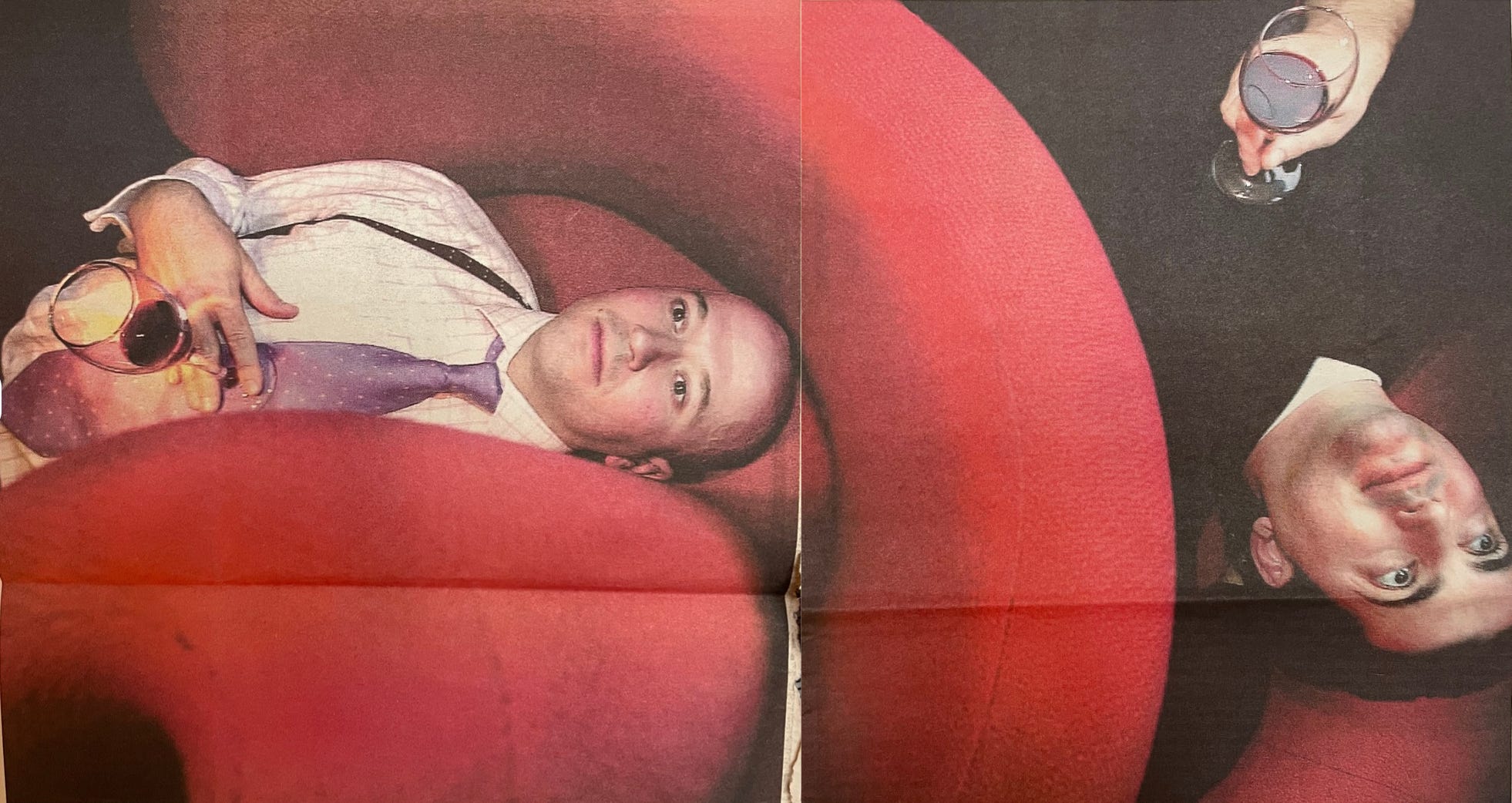
He’s also lucky enough to be in demand as a wine taster. So many of the wines arrive at his door, in the hope that they might get a listing at Bibendum, the London restaurant where he is a part-time buyer. It was at Bibendum that Matthew was “discovered”.
Over the years he helped Bibendum win Restaurant Wine List of the Year and other wine-related accolades. A five-year stint called Wine Hunt on Channel Four led to his first book entitled simply, Wine. The newspaper serialisation was so popular he was offered a job as a wine columnist.
Matthew has what many would consider the perfect job. He combines writing with wine consultancy, acting for everyone from small London restaurants to international hotel groups. As we move on to the next bottle, we discover we both started as sommeliers in 1987. The significance of the year is not lost on Matthew.
“It corresponds with a new era in wine making,” he says. “That year was the first vintage of Cloudy Bay [cultish New Zealand Sauvignon Blanc]; there were new companies in the UK; meanwhile Oddbins was expanding.
“There was the first impact in France of the American wine writer Robert Parker’s reactions to Bordeaux ‘82s. In the UK there was the impact of Hollick, Rosemount and Mas de Daumas Gassac.”
We pause, savouring that gust of warm nostalgia for the late eighties influence on wine. All these names are familiar, but in 1987 they represented a break from the old order. It made its mark on both of us.
As Matthew points out: “If you got into wine in the late eighties yet you’re not passionate about it now, you must be mad.”
We find common ground in having uncomfortable relations with parts of the traditional wine-writing fraternity. “It happens all the time,” he says. “But it’s usually easy to spot, as the same phrases or descriptions tend to re-appear in rival copy.”
This must be gratifying, as he doesn’t consider himself a particularly gifted writer. “Oh no, I’m not a writer,” he says. “I failed my English A level. To be honest I’m still learning to write. I just write it as I say it.”
He tells the story of a TV personality who was asked to guest write a wine column. She thought it would be a doddle, but couldn’t think of what to say. Matthew says: “I find it easy to say something different about each wine. I simply explain what’s in the bottle, for the thousands of people who like wine but have no particular knowledge of the subject.”
Inevitably we get on to the subject of families. He’s horrified at the thought of my four little children, while I envy his “easy” life with only two youngsters. We swap notes on what great bottles we’ve allowed our children to try and how disapproving some people are about it. “It’s funny that my children are already learning what to say about wine,” says Matthew. “If it’s champagne they go: ‘Mmmm fizzy,’ and if it’s red they go: ‘Oooh, strawberries.’ Does it matter what it actually tastes of?”
We agree wine writing is a suitable job for hands-on fathers. “I work from home,” he says, “so I can help with homework, do children’s tea and bath-time.” Promotional trips and tasting excursions take their toll but he is very disciplined on overseas trips.
“I tell wineries that I want to be fast. In and out like a commando raid. I’m about to go on a two-day trip to Chile. I’ll taste flat out. I say to the wineries, if I’m coming then you’ll have to invite all the neighbouring wineries to display their wines at the same time. I need to maximise my time.”
Not all wine writers have that sort of power. But Matthew’s annual book The Wine List, with his top 250 wines, is acquiring the sort of status that makes producers do as they’re told. Much of what he tries is unfinished, unbottled samples of the next year’s vintage, which means that his guide remains valid long after it is published. His columns are pretty powerful too. Once or twice I’ve sold out wines in the west of Scotland, but Matthew does this on a UK-wide scale.
By this stage we’ve worked our way through six different wines, of varying quality. The conversation wanders. We gossip about winemakers. I accuse one, Larry Cherubino from Houghton in Australia, of having the tightest trousers in the trade. Matthew says: “He’s a good friend!” Then thinks for a moment and agrees that he does wear some dreadful trousers.
I have a poke at Matthew’s penchant for roll-neck sweaters. “That’s because I’m a biker,” he says. “Ah yes, the Harley,” I say. “No, it’s a Triumph Tiger, original body shape,” he corrects me, shooting a look at his PR lady. Turns out she put the wrong make on an early press release and the bike mix-up has dogged him ever since. It’s not only wine, it seems clear, about which Matthew likes to be precise and disciplined.
ALL A MATTER OF TASTE
Bonterra Shiraz-Carignane-Sangiovese, 2002, Safeway, £6.99
“This is shocking,” says Matthew. Joe agrees: “I thought it was just aggressively young and bottle shocked, but it’s not improved at all.” Matthew remains unforgiving. “A total car-crash of a wine. And I’ve told them so. The white tri-varietal is really good, in fact it’s in the guide. But this is just all over the place.”
Hill-Smith Estate Cabernet Sauvignon-Shiraz, 1994 – not readily available, from Joe’s collection
“This should be a treat, that’s a really rare label,” says Matthew as they prepare to open this old Aussie. “It’s corked, I’m so sorry,” says a sad Joe. Matthew mourns too. “Such a pity. You can tell that it’s still all there, that lovely fruit and a nice whiff of eucalyptus. Oh dear, what a shame.”
Bellingham ‘Our Founder’s’ Shiraz, 2002
“I like wines where the winemaker has gone the extra mile when they don’t need to,” says Matthew. Massive disappointment awaits. “Feral,” they chant in unison. “Virused fruit, most likely, or perhaps old barrels. It’s like a dirty tack room,” says Matthew. Joe shakes his head. “Some people mistake that for old world style character, but it’s not the same.”
Casillero del Diablo Malbec, 2001, Majestic, £4.99
All round agreement on this one. “Great stuff,” says Matthew. “It’s full of really skinny fruit – all extracted from the dark skins.” “Dense,” says Joe “and it’s got that lovely dusty, earthy taste too. Lovely dry tannins in the mouth.”
Errazuriz Syrah, 2001, Thresher, Wine Rack, Safeway, everywine.co.uk, £6.99
Joe took this along because Syrah had recently been hailed as the latest big thing from Chile. But the verdict was mixed. “It’s good,” says Matthew, “but I just feel that Errazuriz hasn’t kept up with the pace of things in Chile.” “What is there that marks this out from the crowd?” asks Joe. Nice, but not nice enough.
Chateau Mouton-Rothschild, 1983 – from Joe’s collection
Matthew says he would charge around £500 for this in a restaurant. “You star,” he says. “That’s really kind of you. This is a real treat.” “Look,” replies Joe, “I thought you’d appreciate this. There are those who say that ‘83s are getting a bit past it, but it’s still all there.” “Oh yes, absolutely,” replies Matthew. “It’s all tweedy and old but there’s 10 years in this, it’s super. What a lovely bottle. You shouldn’t have.”
Poignant piece. Nicely judged Mr F
Really lovely article. Very sad time. 💔